Best Dehumidifiers UK 2026: 3 Top Picks for Damp, Mould and Laundry
As the heating goes on and the washing moves indoors, UK homes fill up with moisture. That means streaming windows, black mould in corners and a musty smell in wardrobes. A good dehumidifier pulls that water out of the air, and it can dry your laundry for far less than a tumble dryer. We've picked three standouts sold on Amazon UK: a quiet all-rounder, a budget pick for smaller homes, and a desiccant model that keeps working in cold rooms.
How we chose: this is a researched buying guide, not a hands-on test. We compared manufacturer specifications and Amazon UK listings, prices and ratings with independent UK reviews from Which?, Expert Reviews, The Guardian, The Standard and Ideal Home. Prices were checked on Amazon UK on 16 October 2026. They change often, especially in autumn, so check the latest price before you buy. Running costs use the manufacturers' figures at around 26p per kWh.
At a glance
| Model | Best for | Type | Max per day | Tank | Noise | Power | Approx. price |
|---|---|---|---|---|---|---|---|
| MeacoDry Arete One 20L | Best overall | Compressor | 20 L | 4.8 L | 38–40 dB | 216W | ~£255 |
| Pro Breeze 12L | Budget | Compressor | 12 L | 1.8 L | <38 dB | 200W | ~£135 |
| EcoAir DD1 Simple MK3 | Cold rooms | Desiccant | 7.5 L | 2 L | 34–47 dB | 300–580W | ~£180 |
1. Best overall
MeacoDry Arete One 20L
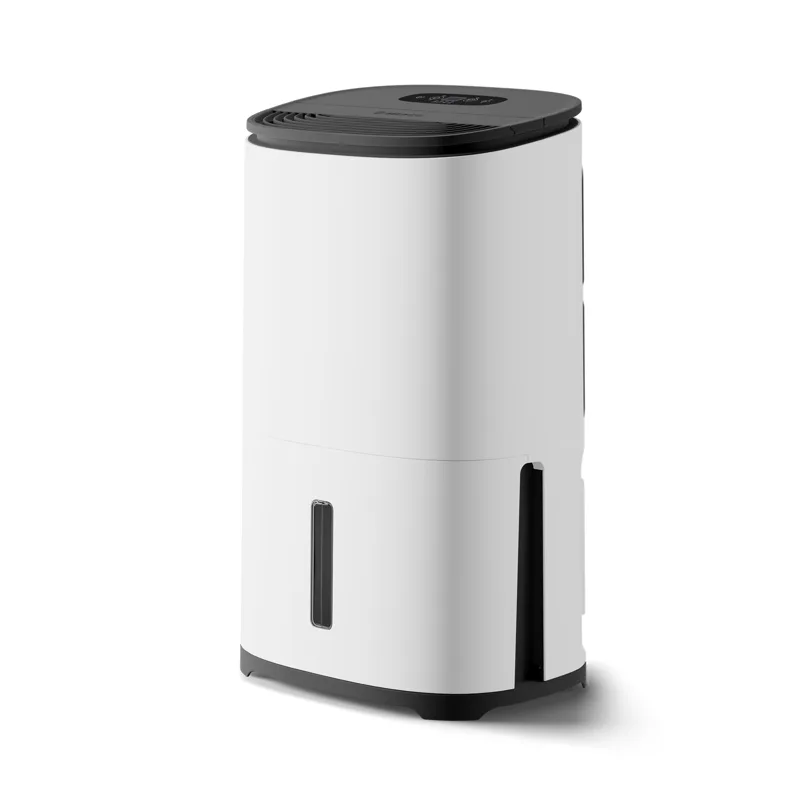
Price: £254.99 on Amazon UK when we checked (16 October 2026), with only a few left in stock. Meaco and Argos list it at around £260.
Meaco is a Surrey-based specialist, and the Arete One is the dehumidifier it built from feedback from more than 2,000 customers. It combines a 20-litre compressor dehumidifier with a medical-grade H13 HEPA filter, so it also cleans the air of dust, pollen and pet dander. It is Quiet Mark Certified, and The Standard named it its best dehumidifier overall in 2026, praising its quiet running, simple controls and excellent laundry drying. Its tester did find it heavy and said the tank fills quickly in very damp rooms.
Key specs
- Extraction: up to 20 litres a day (Meaco, at 30°C and 80% RH). Expect less in a typical UK home
- Tank: 4.8 litres, with a continuous drainage option via a standard garden hose adapter
- Noise: 38 dB(A) on low and 40 dB(A) on high (Meaco). Quiet Mark Certified
- Power: 216W, about 6p an hour at 26.32p/kWh (Meaco)
- Laundry mode: yes. Also a night mode, an air-purifier-only mode and a humidistat from 40% to 70%
- Smart features: none, as it has no app or Wi-Fi. The Arete Two 20L adds these
- Size and warranty: 618 × 366 × 272 mm, 15 kg on castors. 5-year warranty
Pros
- Quiet Mark Certified and quiet for a 20-litre machine
- Built-in H13 HEPA air purifier
- Large 4.8-litre tank and continuous drainage
- 5-year warranty
Cons
- Heavy, at 15 kg
- No app, Wi-Fi or on/off timer
- Pricier than budget 12-litre models
Best for: Most homes with condensation, damp or indoor laundry, especially if you also want cleaner air.
Watch out for: It is heavy at 15 kg and has no app or timer. Stock on Amazon was low when we checked.
Want app control? The MeacoDry Arete Two 20L (£299 on Amazon UK when we checked) is also Quiet Mark Certified and adds Wi-Fi app control, a timer and a three-speed DC fan. Expert Reviews named it Dehumidifier of the Year in its 2026 awards.
2. Best budget pick
Pro Breeze 12L Dehumidifier (PB-18-UK)
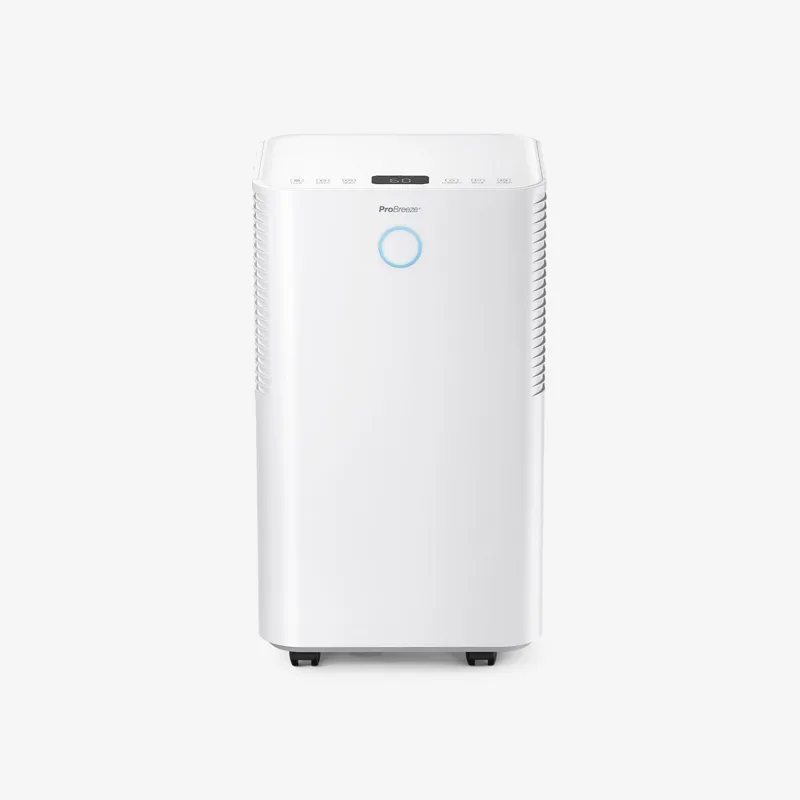
Price: £134.99 on Amazon UK when we checked (16 October 2026).
The Pro Breeze 12L is one of Amazon UK's best-selling dehumidifiers, with a 4.6-star average from more than 5,600 ratings. Its Amazon listing says it won a Which? Best Buy award in 2025. It's compact enough for a flat or a single damp bedroom, but still has the features that matter: an automatic humidity sensor, a laundry mode, a sleep mode and a 24-hour timer. The trade-offs are a small tank that needs emptying often and a shorter warranty than Meaco's.
Key specs
- Extraction: up to 12 litres a day (Pro Breeze, at 30°C and 80% RH)
- Tank: 1.8 litres (Amazon UK listing), with a continuous drainage hose included
- Noise: under 38 dB according to the Amazon listing (Costco lists it at 36 dBA or less)
- Power: 200W, about 5p an hour at 26.32p/kWh
- Laundry mode: yes. Also auto, continuous and sleep modes, and a 24-hour on/off timer
- Smart features: none, as it has no app
- Size and warranty: 445 × 255 × 220 mm on wheels. 1-year warranty (Amazon UK listing)
Pros
- Low price for a compressor model
- Humidity sensor, timer and laundry mode
- Compact and on wheels
- Huge number of Amazon UK reviews
Cons
- Small 1.8-litre tank
- 12 litres a day is too little for a large damp house
- Only a 1-year warranty
Best for: Flats, bedrooms and smaller homes, and anyone on a tight budget.
Watch out for: The small tank fills fast in very damp rooms unless you use the drain hose, and it only has a 1-year warranty.
3. Best for cold rooms and laundry
EcoAir DD1 Simple MK3 (desiccant)
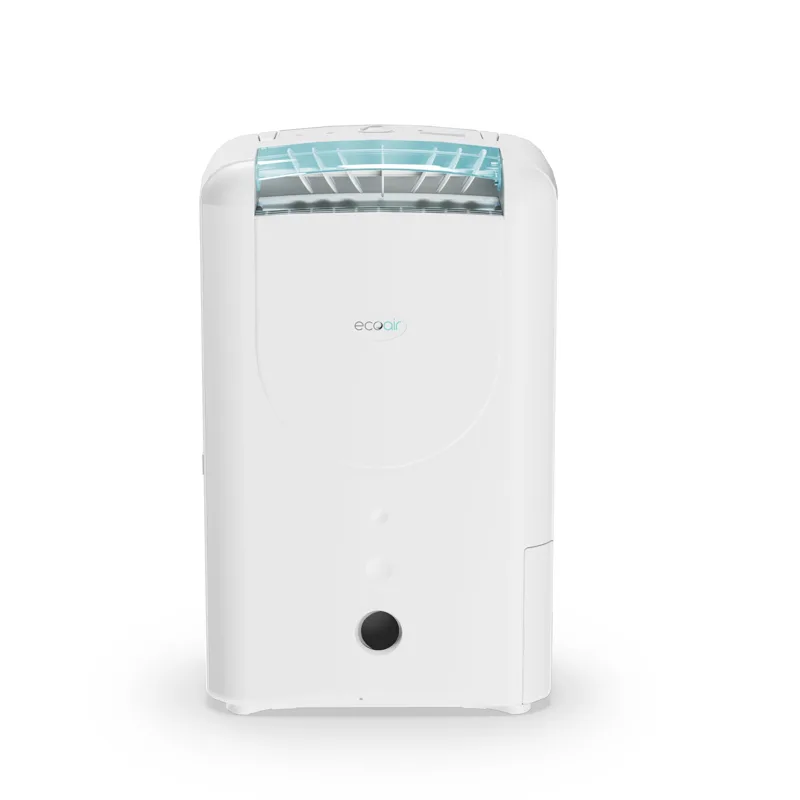
Price: £179.99 on Amazon UK when we checked (16 October 2026). EcoAir sells it direct for £199.98.
Compressor dehumidifiers lose much of their power as rooms get cold, which is a real problem in a UK winter. The DD1 Simple MK3 is a desiccant model, so it keeps working from just 1°C. That makes it a strong choice for unheated bedrooms, garages, conservatories, boats and caravans. It also gives off slightly warm air, which helps with drying washing. Ideal Home tested it and praised its laundry mode, light weight and simple dial controls, but pointed out its higher running costs and basic features.
Key specs
- Extraction: up to 7.5 litres a day (EcoAir, at 20°C and 60% RH). Desiccant figures are quoted in more typical conditions than compressor figures
- Tank: 2 litres, with a continuous drainage option
- Noise: 34 dB(A) on economy and 47 dB(A) on turbo (EcoAir)
- Power: 300W on economy (about 8p an hour) and 580W on turbo (about 15p an hour), per EcoAir at 26.35p/kWh
- Laundry mode: yes, with an adjustable 3D louvre to aim the airflow at the airer
- Smart features: none. It uses a simple rotary humidity dial, with no display or app
- Size and warranty: 475 × 290 × 175 mm, 6 kg with a carry handle. 3-year warranty from EcoAir
Pros
- Works from 1°C, so it handles cold rooms well
- Light at 6 kg and easy to carry
- Good laundry mode with a warm airflow
- Simple dial controls and a 3-year warranty
Cons
- Higher running costs (300 to 580W)
- Small 2-litre tank
- No display, timer or app
Best for: Cold or unheated rooms, drying laundry in winter, and anyone who wants a light, simple machine.
Watch out for: It costs more to run than a compressor model, has a small tank and no digital display, and is best for smaller spaces.
Also consider for laundry: the Duux Bora Smart 20L (£229.99 on Amazon UK when we checked) is a Quiet Mark Certified compressor model with app control and a 4-litre tank. The Guardian named it its best dehumidifier for drying laundry, and Expert Reviews highly commended it in its 2026 awards. As a compressor model, though, it is better suited to heated rooms.
How to choose a dehumidifier
Compressor or desiccant? Compressor dehumidifiers work like a fridge, cooling the air so water condenses out. They're the most energy-efficient choice for heated homes, but they slow down noticeably below about 15°C. Desiccant models absorb moisture with a heated material instead, so they work just as well in cold rooms, garages and conservatories. They're lighter and give off a little warmth, but they use more electricity.
Match the size to your home. A 10 to 12 litre model suits a flat or one or two problem rooms. For a family house, or a home with serious condensation, a 20 litre model will reach your target humidity faster and then sit quietly on a low setting. Bear in mind that compressor capacity is usually quoted at 30°C and 80% humidity, which is far warmer and wetter than a typical British living room.
Work out the running costs. Multiply the wattage by your electricity price. At about 26p per kWh, a 200W machine costs roughly 5p an hour. Most models switch off once they reach your target humidity, so you won't pay that every hour of the day.
Check the tank and drainage. Small tanks fill quickly in damp weather. If you'll run it constantly, choose a model with continuous drainage so you can run a hose into a sink or drain.
Think about noise. If it's going in a bedroom, look for a night or sleep mode and a low decibel rating. Quiet Mark Certified models, like the MeacoDry Arete One, have been independently assessed for low noise and sound quality.
Laundry mode matters. If you dry clothes indoors, a dedicated laundry mode runs the machine at full power for a set time, and a swinging louvre lets you aim the airflow at the airer.
FAQs
What is the best dehumidifier in the UK in 2026?
For most homes we'd shortlist the MeacoDry Arete One 20L. The Standard named it its best dehumidifier overall in 2026, it is Quiet Mark Certified, and it doubles as an H13 HEPA air purifier. If you want app control, the Arete Two 20L adds Wi-Fi for about £45 more.
Should I buy a compressor or desiccant dehumidifier?
Compressor models are usually cheaper to run and work best in heated rooms above about 15°C. Desiccant models keep working in cold spaces down to around 1°C, such as garages, conservatories and unheated bedrooms, and give off gentle warmth, but they use more electricity.
How much does a dehumidifier cost to run?
Multiply the wattage by your electricity price. At 26.32p per kWh, a 200W compressor model costs about 5p an hour and a 216W model about 6p. The EcoAir desiccant uses 300W on its economy setting (about 8p an hour) and 580W on turbo (about 15p). Most dehumidifiers switch off once the room reaches your target humidity, so real costs are usually lower.
What size dehumidifier do I need?
As a rough guide, a 10 to 12 litre model suits a flat or a couple of rooms, while a 20 litre model suits a 3 to 5 bedroom house or a home with a serious damp problem. Daily extraction figures are measured in warm, very humid lab conditions, so expect less in a typical UK home.
Can a dehumidifier dry clothes?
Yes. All three of our picks have a laundry mode. Put the dehumidifier in a small room with the door closed and the clothes airer close by. It's usually much cheaper than running a tumble dryer, and it stops the moisture from the washing settling on your windows and walls.
What humidity should I aim for at home?
Somewhere between about 40% and 60% relative humidity is a good target. Mould and dust mites thrive above roughly 60 to 70%. Most dehumidifiers let you set a target and will switch on and off automatically to hold it.
More home comfort
Staying cool next summer? Read our MeacoFan Sefte 10" review, another Quiet Mark Certified Meaco product. You can also browse our best robot vacuums UK 2026 guide.
Sources: manufacturer specifications from Meaco (meaco.co.uk and meaco.com), Pro Breeze and EcoAir (ecoair.org), and their Amazon UK listings. Independent reviews: The Standard's best dehumidifiers test (2026), the Expert Reviews Product of the Year Awards 2026, The Guardian's best dehumidifiers test (October 2025), Ideal Home's EcoAir DD1 Simple MK3 review, and Which?'s dehumidifier testing. We also checked Quiet Mark's list of certified products. We have not tested these dehumidifiers ourselves.